A construction vacancy is only the start: could a poorly run project undermine your move?
News · 2026-08-20 · 3 min read
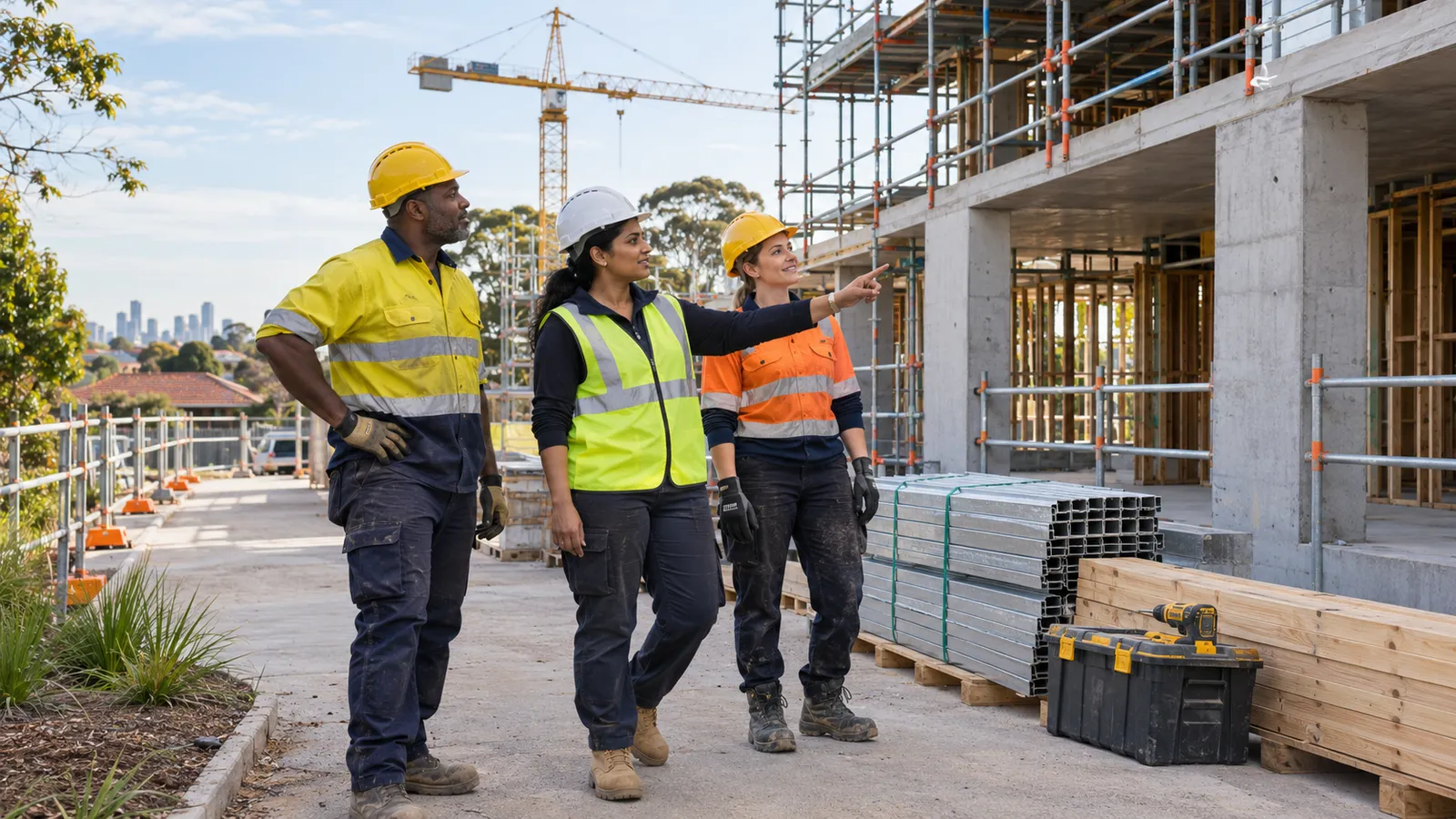
An Australian construction vacancy can be attractive without being the right move for you. The quality of the project matters alongside the demand for your trade: approvals, supervision, training and clear responsibilities influence whether your skills can be used properly. Recruitment is only part of the answer when inefficient systems keep workers waiting.
Ask where useful working time is being lost
Australia’s construction discussion often begins with headcount. Projects face delays and employers struggle to recruit, so more apprentices and overseas workers appear to be the obvious response. Yet weak output per worker suggests another problem. Outdated approvals, overlapping regulation and poorly coordinated work can prevent capable people from doing the jobs they were hired for.
For a newcomer, that distinction is practical. You may arrive with strong trade experience and still spend time waiting for information or decisions. A shortage of labour and a shortage of effective organisation can exist on the same site.
Read reform proposals as questions for an employer
Consultation on national construction standards creates an opportunity to improve the way projects operate. Contractors, unions and clients have recognised the need for change. Clearer standards could also make qualification recognition and induction more consistent, but a consultation is not evidence that those improvements have already reached a particular workplace.
Ask how the project introduces overseas workers, who checks completed work and how problems are resolved. Transparent contracts and accessible dispute pathways matter. Our coverage of construction’s recruitment and training pressures explains the wider setting, while the builder shortage examines another part of the same challenge.
Consider whether the role offers a workable career
A business struggling to earn sustainable margins may find it difficult to invest in training or better technology. That can affect the stability a worker needs when moving countries. The useful discussion is therefore broader than whether a job exists: what work is planned, how is it organised and what support will help you perform it?
Use individual vacancy details as the starting point for those questions. Prepare examples of projects where you worked effectively with supervisors and other trades. Build AI CV can help organise that experience into a readable application.
Common mistakes when comparing construction roles
- Assuming a busy project must be well organised.
- Reading proposed national standards as completed reform.
- Leaving induction and supervision questions until arrival.
- Judging a move only by the number of advertised jobs.
Questions to ask about the project behind the vacancy
Can overseas recruitment solve every delay?
No. Additional skills cannot repair an approval process or poorly coordinated work on their own.
What could national standards improve?
They could support clearer recognition and onboarding if they are practical, enforced and applied consistently.
Why ask about dispute procedures?
You need to know how concerns can be raised when responsibilities or working arrangements are unclear.
What experience should my application explain?
Show the work you have done and how you contributed within a functioning project team.
Assess the workplace as carefully as the opportunity
Australia needs construction capability. A worthwhile move also needs a project that can use that capability effectively, with clear expectations and support beyond the initial recruitment process.
#construction jobs #project planning #trade skills #productivity
 Australia's migration targets: what do they actually tell a job seeker?
 Study or trade? Why a Certificate III could be the quicker route into Australian work
 Degree from an Australian university but stuck in a job below your skill level? What a national study found