Unemployment rose, yet builders still need trades: why your occupation matters more
News · 2026-08-21 · 3 min read
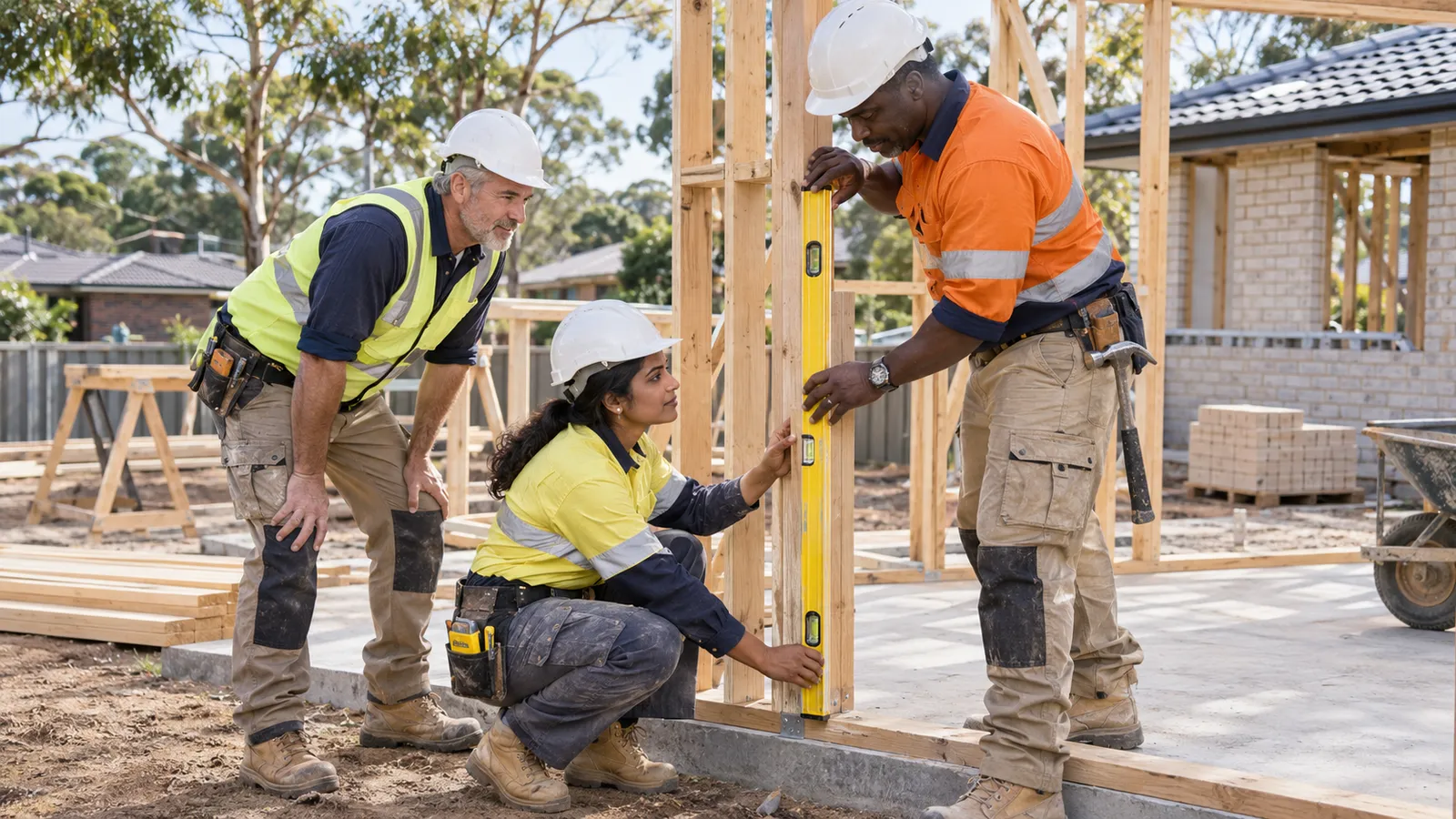
A higher unemployment rate does not mean every Australian employer can find the skills needed. Construction can face persistent shortages while hiring weakens elsewhere, because a worker available in one occupation is not automatically qualified for another. Overseas tradespeople should examine that mismatch rather than read a national headline as a verdict on their prospects.
Put the labour-market figures beside the building target
July 2026 Labour Force figures showed unemployment at 4.5 per cent and an employment fall of around 15,800, largely in part-time work. Those numbers described the economy as a whole. They did not remove the demand for people capable of carrying out specific construction tasks.
The National Housing Accord target was 1.2 million homes by mid-2029, alongside Olympic infrastructure and other major projects. Delivering that work depends on experienced carpenters, electricians, plumbers and site supervisors. An increase in people looking for work cannot immediately replace those capabilities.
Understand why training and recruitment work on different clocks
Apprenticeship starts had fallen to a low, weakening the future supply of tradespeople. Restoring training incentives and expanding access to vocational education could help rebuild that supply. The difficulty is timing: people need training and experience before they can contribute as qualified workers.
Skilled migration can address some immediate needs while domestic training develops. Yet slow processing, costs and occupation settings can make overseas recruitment difficult too. Calls for clearer recognition and stronger construction priority are calls for reform, rather than evidence that every proposed improvement is already available.
Compare the role with your own evidence
For an applicant, the useful response is to identify the work you can demonstrate and the recognition it requires. Keep records of your duties, training and projects. Our explanation of trade skills in migration planning gives related context. The article on project productivity and organisation explains why recruiting more people is not the whole solution.
Review the actual criteria in Australian vacancies before assuming that a general shortage matches your experience. A clear English CV should connect your work history with those criteria; Build AI CV can help organise the information.
Common mistakes when interpreting a softer jobs market
- Assuming national unemployment describes the prospects of every trade.
- Treating a housing target as proof that a particular employer is hiring.
- Confusing recommended visa reforms with current requirements.
- Expecting an overseas certificate to explain practical experience by itself.
Questions tradespeople ask about the mismatch
Why can vacancies persist when unemployment rises?
The skills available may not match the work employers need performed.
Could apprenticeships eventually reduce shortages?
They can build a future workforce, but training takes time.
Does the article promise faster processing?
No. Faster processing was among the changes being sought.
What should I investigate first?
Start with your occupation, the employer’s requirements and the recognition relevant to the role.
Use the shortage as a reason to investigate carefully
Construction demand and economic weakness can coexist. Match your experience to real work, keep policy proposals separate from existing rules, and plan around evidence rather than broad employment headlines.
#construction skills #unemployment #apprenticeships #skilled migration
 A visa with no job offer? New Zealand's proposed Catalyst Visa would cap places at 300
 Is every major country closing its doors at once? What the pattern means if you want to work in Australia
 A construction shortfall that could reach 935,600: what overseas tradespeople should do now