Welding work in Australia: is the workshop ready for its next project?
Tips · 2026-09-30 · 3 min read
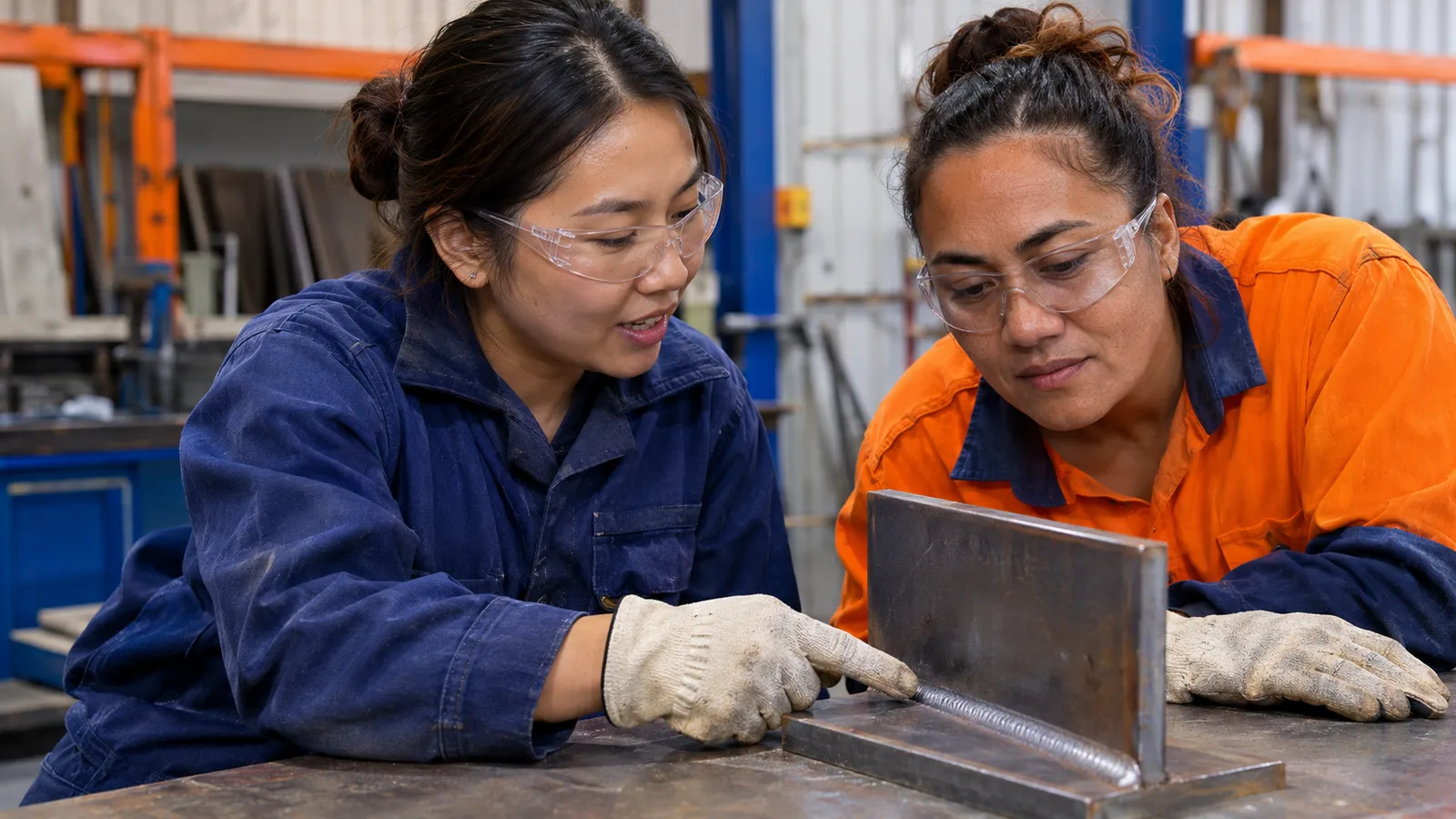
Australia's fabrication sector can lack qualified welders while individual workshops still face uncertain workloads. For an overseas applicant, assess both the skills demand and the actual business opportunity. A survey describing future needs does not establish that every workshop has funded work or an overseas recruitment plan.
Read the survey's competing pressures together
The 2026 workforce account says 89.2 per cent of respondents considered Australia short of qualified welders for infrastructure and defence work ahead. At the same time, six in ten had three months or less of confirmed work, and one in five had none.
Almost 60 per cent of workshops were operating below 75 per cent capacity. That can reflect a mismatch between skills, contracts and available work. It does not mean every idle workshop could immediately employ an arriving worker.
Standards and project evidence belong in your preparation
The source describes concern about whether fabricated products meet Australian standards. It also discusses calls for stronger local content rules, independent verification and a proposed Australian Fabrication Authority.
These are industry requests, not confirmation that all proposed measures have been enacted. For an applicant, the immediate task is to explain the processes, materials, inspection practices and responsibilities relevant to the vacancy without claiming credentials you do not hold.
Compare our coverage of trade recognition planning and construction business capacity.
Look for investment as well as recruitment
The account describes rising energy and materials costs while some businesses held selling prices. Despite that pressure, half of respondents increased technology investment, 42.8 per cent increased staff training investment and 39.2 per cent increased research and development investment.
These findings can guide questions about a workplace's development plans. They do not establish that a particular employer offers training or a benefit. Ask what the advertised role actually involves and what support is part of its terms.
- Check that your welding or fabrication experience matches the duties.
- Prepare evidence of processes and quality responsibilities.
- Ask about the confirmed work pipeline.
- Assess recognition and migration conditions independently.
Use welding and related vacancies to compare requirements. A CV detailing relevant fabrication work can show practical fit without converting a sector forecast into a personal claim.
Common mistakes when a welding shortage makes headlines
Avoid treating survey opinion as a vacancy count, assuming every workshop has secure contracts or describing proposed procurement reforms as current law. A shortage does not settle individual skills assessment or visa eligibility.
Questions before applying to an Australian workshop
Does unused capacity mean an open job?
No. Contracts, skills needs and recruitment decisions still matter.
Are industry proposals already requirements?
Not merely because the account calls for them.
Does the survey describe every workshop?
No. Its findings concern respondents.
What should my application demonstrate?
Relevant processes, quality responsibilities and documented experience.
Match practical skill to reliable work
Assess the role, standards and project pipeline together. That gives a more useful basis for a welding career decision than the shortage figure alone.
#welding #australia #fabrication #careers
 A trade career in Australia: what must happen before demand becomes a job?
 Australia job market 2026: what the latest figures mean for your overseas search
 New Zealand AI jobs: can you show how people and systems work together?