Regional Australian work lined up? Keep visa timing out of your assumptions
News · 2026-09-07 · 3 min read
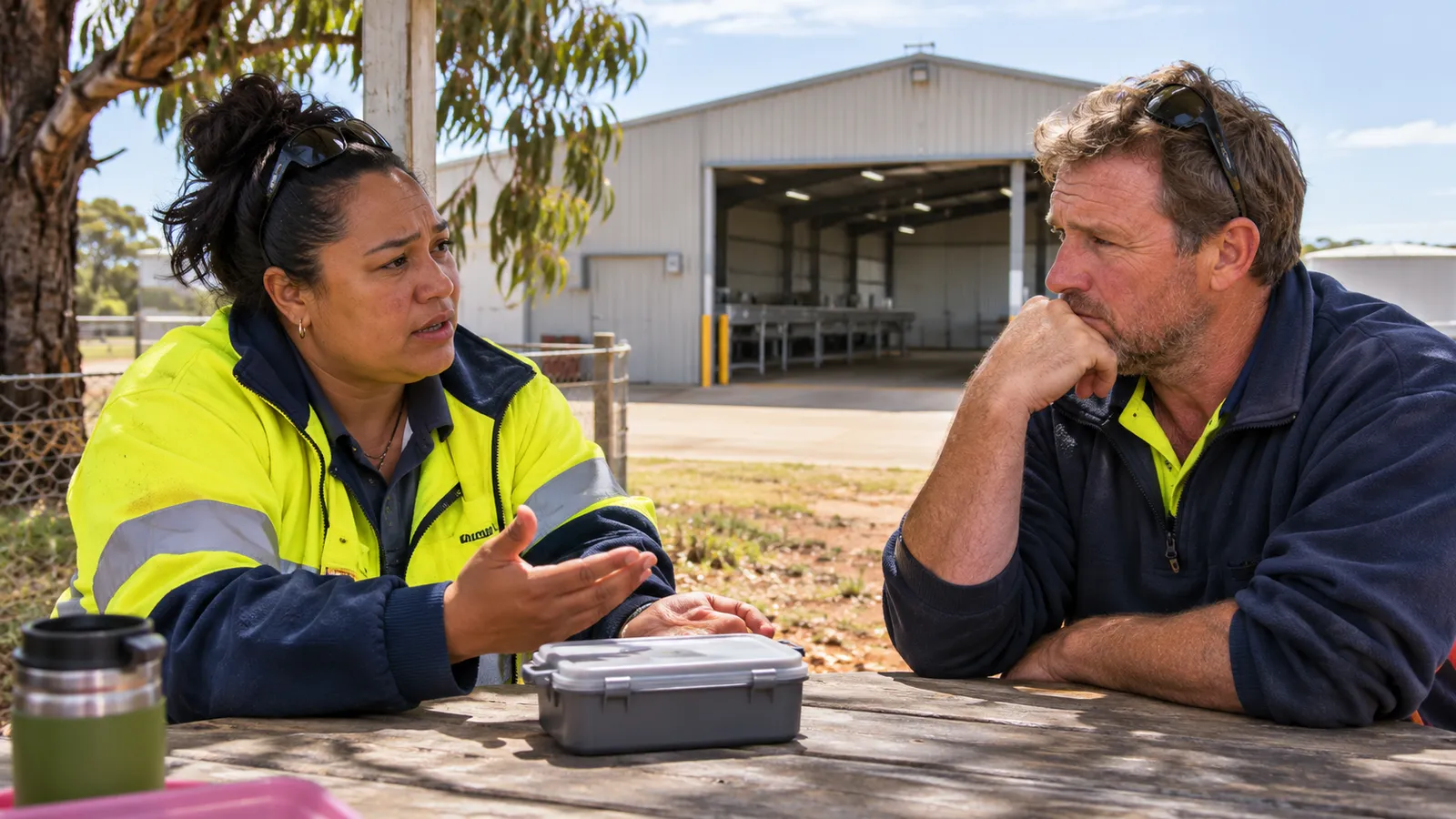
An Australian employer can need workers urgently while the relevant visa applications still face a slow queue. The Western Australian meat and pork examples discussed here show why recruitment, processing priority and a business opening are different timelines. An overseas applicant should not interpret money spent or a planned start date as confirmation of permission to begin work.
Priority changes affect the order of attention
The account describes a five-tier skilled processing framework introduced in July. Offshore applicants outside specified priority sectors were placed lower in the hierarchy. Meat processing and pork production were not among the priority sectors described.
A processing hierarchy concerns how applications are prioritised. It does not mean a lower-priority occupation has been removed from every migration route, or that the employer's labour need has disappeared. The source describes continued processing under programme requirements.
A remote shortage does not set the visa timetable
In the regional abattoir example, 60 skilled positions attracted only one Australian resident applicant, who did not have the required skills. A recruitment group of roughly 30 workers and 13 partners had been arranged, with around $390,000 in visa charges paid.
Those facts explain business pressure without establishing a decision date. The planned reopening shifted, disrupting cattle supply arrangements as well as recruitment. The separate pork example described a workforce roughly 90 per cent recruited from overseas and expansion from 1,500 to 2,500 sows. Production commitments did not pause while applications waited.
Read our related coverage of visa processing priorities and regional recruitment delays to understand the planning problem.
Agree a start plan that can change safely
These examples concern particular businesses and recruitment arrangements. They are not restrictions on nationality and should not be read as an invitation reserved for the workers' home country. Applicants from anywhere need to assess the conditions relevant to their own role.
- Keep the employment offer and visa application status clearly distinguished.
- Discuss how the start date will be handled if processing is delayed.
- Keep documents and contact information ready for requests.
- Base travel and employment commitments on confirmed conditions.
Check available Australian roles for actual requirements. To keep applications clear, present relevant processing or production experience in your CV.
Common mistakes when an employer needs staff urgently
Avoid assuming that paid charges mean approval, that a planned launch controls visa timing, or that regional need creates an automatic priority exception. Recruitment communication is useful, but it does not replace the actual visa decision.
Questions about regional recruitment and processing
Does lower priority mean an application is refused?
No. Priority and the eventual decision are different matters.
Does paying a charge confirm a grant?
No. It is not a decision on the application.
Is a production deadline a visa deadline?
No. A business schedule does not determine processing.
Are the examples limited to applicants of one nationality?
They describe particular recruitment groups, not a general nationality restriction.
Keep the job plan tied to confirmed status
Understand the role, maintain contact with the employer and allow the start plan to respond to real processing progress. Urgency in the business cannot supply an immigration outcome.
#regional #hiring #australia #visa processing
 Harvest work in Australia: does an urgent referral settle your visa timing?
 Degree from an Australian university but stuck in a job below your skill level? What a national study found
 Net migration cut to 100,000? What the Opposition's plan could mean if you want to work in Australia