Only seven apprentice bricklayers in the ACT: what the gap means if you lay bricks for a living
News · 2026-08-24 · 4 min read
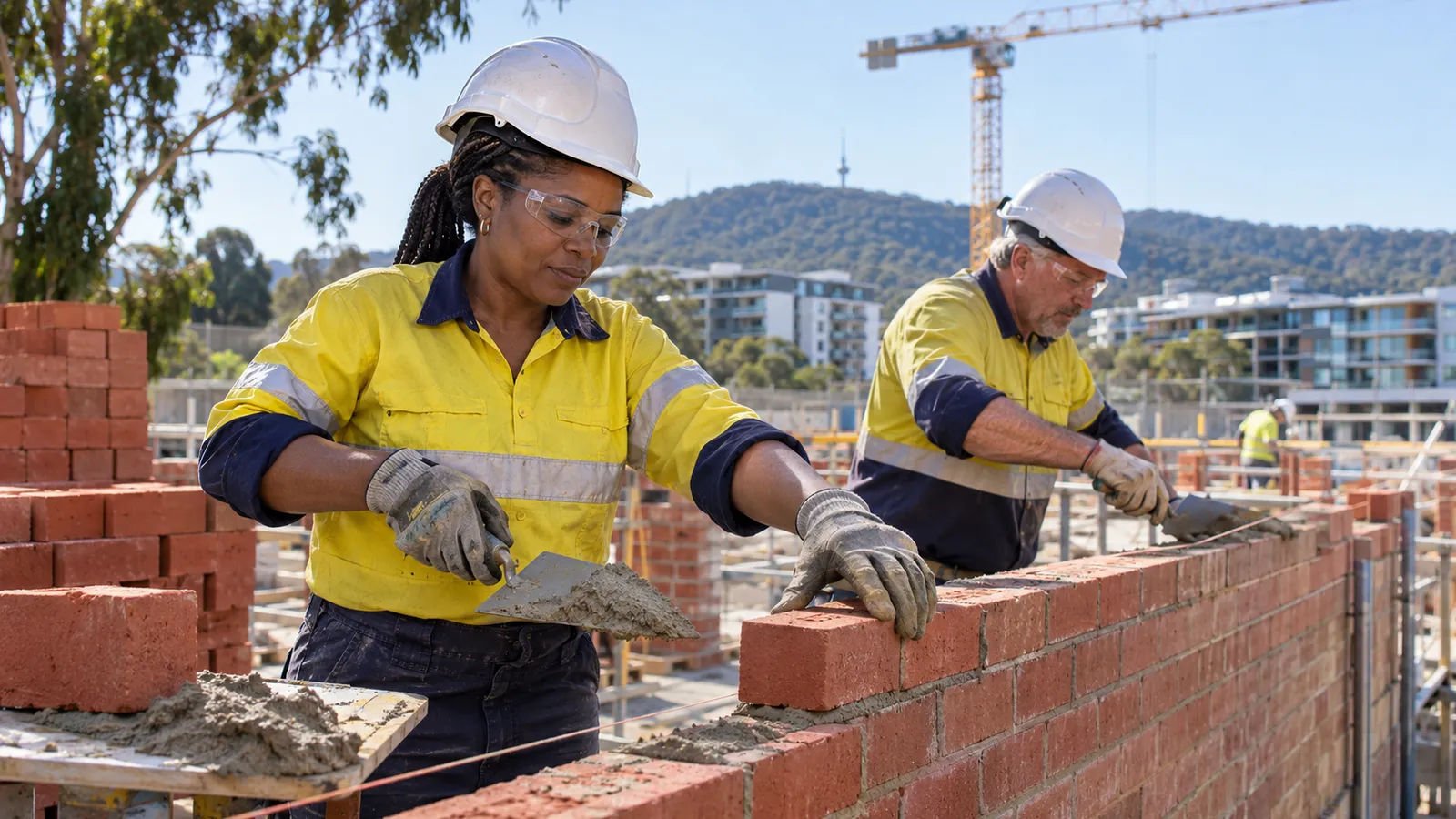
Short answer: Canberra is building more while training fewer bricklayers, and that creates real openings for qualified tradespeople from overseas. Only seven people were training as bricklayers anywhere in the ACT region, and the territory has committed to 30,000 new homes by 2030. The same shortage also means you will need to show your own qualifications clearly.
The numbers behind the shortage
Over the same period, the construction workforce grew by 10 per cent while apprentice numbers fell by 20 per cent. What remains is a trade held together by a small group of workers, many past the age when peers start thinking about retirement. Industry bodies call it a crisis. For a skilled newcomer, it is a market with sustained demand.
An unusual rule in the ACT
In the ACT, bricklaying is not a licensed occupation, so anyone can lay bricks on a residential or commercial site without proving a qualification. Experienced trainers say the result is inconsistent workmanship from people who were never properly trained.
That cuts both ways. It is a quality problem for the industry, but a migrant with formal qualifications and site experience walks into a market where trained bricklayers are rare and valued. Local business owners who have run bricklaying firms for over two decades say they are not short of work. They are short of reliable people to put on the trowel.
Why the gap is not a blip
- The apprenticeship pipeline is thin. Most apprentices train through residential building, and residential activity in the ACT is soft, even though commercial and infrastructure projects, including light rail, keep labour demand high. Fewer residential jobs means fewer employers willing to commit to a four-year apprenticeship.
- Many start, few finish. The Housing Industry Association noted that far more apprentices start than complete. The trade is physically demanding, and apprentices can spend too much time labouring instead of building trowel skills.
- The workforce is ageing. On many sites, tradespeople over 40 are the norm. Without new arrivals, that expertise retires and is not replaced.
A housing target of 30,000 new homes cannot be met with seven apprentices in the pipeline.
How to read a local labour market
| Signal | What it can mean for you |
|---|---|
| Sustained demand from government commitments | Work is likely to be steady rather than a short spike |
| Employers openly acknowledging the gap | Hiring can move faster, and some may consider sponsoring |
| No licence for the trade in the ACT | Easier entry, but you must prove your own skills |
None of this changes the fact that bricklaying is hard physical work. But for someone with the training and stamina, an undersupplied market is often where a skilled pathway pays off soonest. Skills assessments for trades are a common step, and RPLDirect explains how recognition of prior learning can work in Australia.
Related reading includes our piece on the tradie shortage and our look at trades as a migration pathway. See current vacancies for building roles, and prepare your documents with Build AI CV so your tickets and site history are easy to read.
Common mistakes for tradespeople moving to Australia
- Assuming no licence means no proof of skill is needed.
- Choosing a city only because one article calls it undersupplied.
- Underestimating how physical the work is.
- Not keeping evidence of qualifications and site experience in order.
Questions tradespeople ask about the bricklayer gap
Is bricklaying licensed in the ACT?
It is not, so anyone can legally lay bricks. Employers still value proven qualifications.
How many people are training in the ACT region?
Only seven, against a construction workforce that has grown by 10 per cent.
Does a shortage mean a job offer is certain?
No. It means demand is strong, but you still need the right documents and an employer.
Where can I check visa requirements?
Use the official Department of Home Affairs website and our visa guides.
What to remember before you apply
A thin training pipeline, an ageing workforce and a large housing target add up to lasting demand. Prepare proof of your skills, read the labour market with care, and treat the shortage as an opening, not a promise.
#bricklayer #construction trades #canberra #skills shortage #skilled migration
 A visa with no job offer? New Zealand's proposed Catalyst Visa would cap places at 300
 Is every major country closing its doors at once? What the pattern means if you want to work in Australia
 Louder migration debate, same empty roles: what it could mean for your Australian plans